Willa Roth · 25 October 2026
How Custom Recommendation Engines Alter Content Prioritization in Niche Digital Spaces
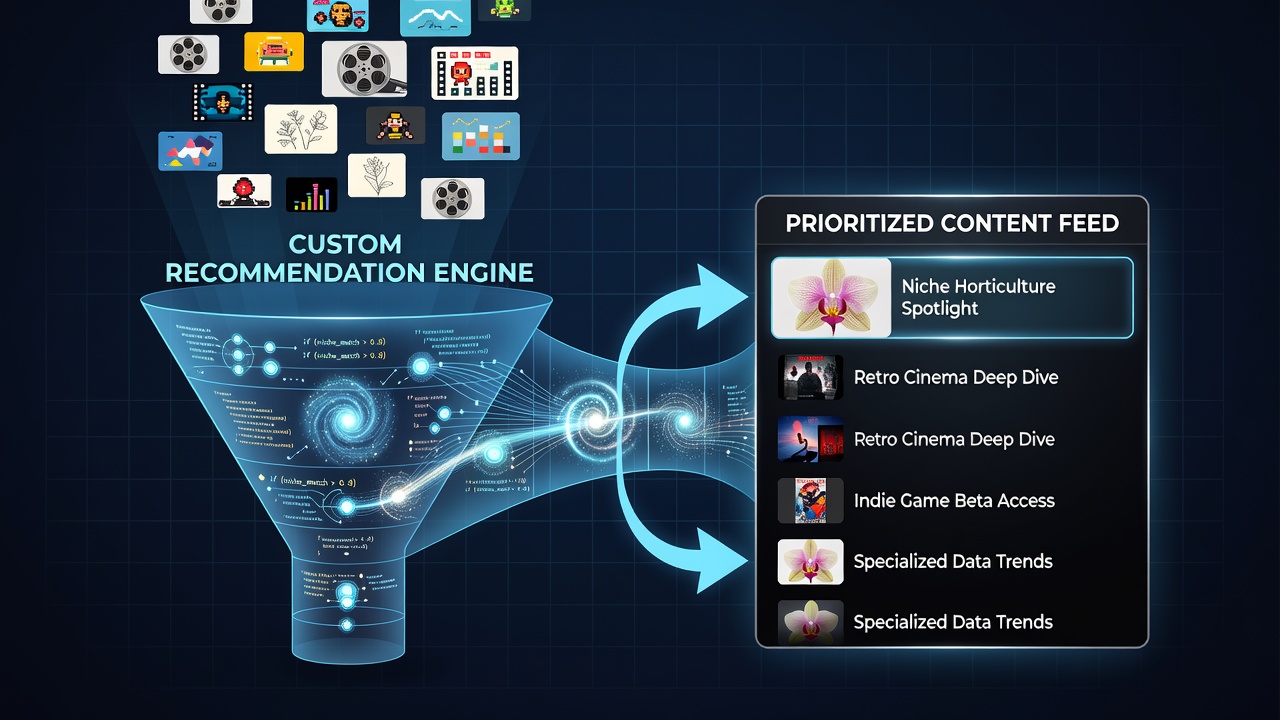
Custom recommendation engines operate by analyzing user behavior patterns within confined digital environments where general algorithms often fall short, and they shift content prioritization toward metrics that reflect sustained engagement rather than broad appeal. These systems process data from niche platforms such as hobbyist forums, specialized educational repositories, and community-driven archives, where they weigh factors like repeated interactions and topic depth over simple view counts. Researchers at institutions focused on information retrieval have documented how these engines integrate user-specific signals including dwell time on obscure threads and cross-reference patterns between related posts, which leads platforms to surface material that aligns tightly with subgroup interests.
Mechanics Behind Tailored Prioritization
Engineers build these systems on modular frameworks that allow platforms to override default ranking signals from major search providers, and they incorporate custom loss functions designed around niche retention goals. Data pipelines feed real-time interactions into models that adjust scores dynamically, while semantic embeddings help match content to evolving community vocabularies. Observers note that in environments like independent music discussion boards or regional history archives, the engines elevate contributions from long-term participants because historical interaction logs reveal higher loyalty metrics compared to viral outliers. This approach contrasts with mainstream feeds that favor recency and share velocity, yet it produces measurable shifts in what appears at the top of user feeds during sessions that extend beyond initial visits.
Studies from academic groups tracking digital ecosystems indicate that platforms deploying these engines see changes in content distribution as early as the first quarter following implementation. For instance, material tagged with granular descriptors receives boosted visibility when user clusters demonstrate consistent follow-through on similar material, and this pattern holds across multiple platform types. The adjustments occur through feedback loops where negative signals such as quick exits trigger demotion, which forces creators to refine their output based on observed performance data rather than assumptions about audience size.
Observed Shifts in Content Discovery Patterns
Content creators in these spaces adapt their production schedules and topic selection once engine behavior becomes apparent through analytics dashboards, and they often emphasize continuity with existing discussions to maintain algorithmic favor. Platforms report that prioritization moves away from broad keyword matches toward relational graphs built from user navigation histories, which means standalone posts lose ground to interconnected series. Figures from platform telemetry collected through 2025 and into October 2026 reveal that sessions involving niche recommendation outputs last longer on average, with users traversing more layers of related material before exiting.
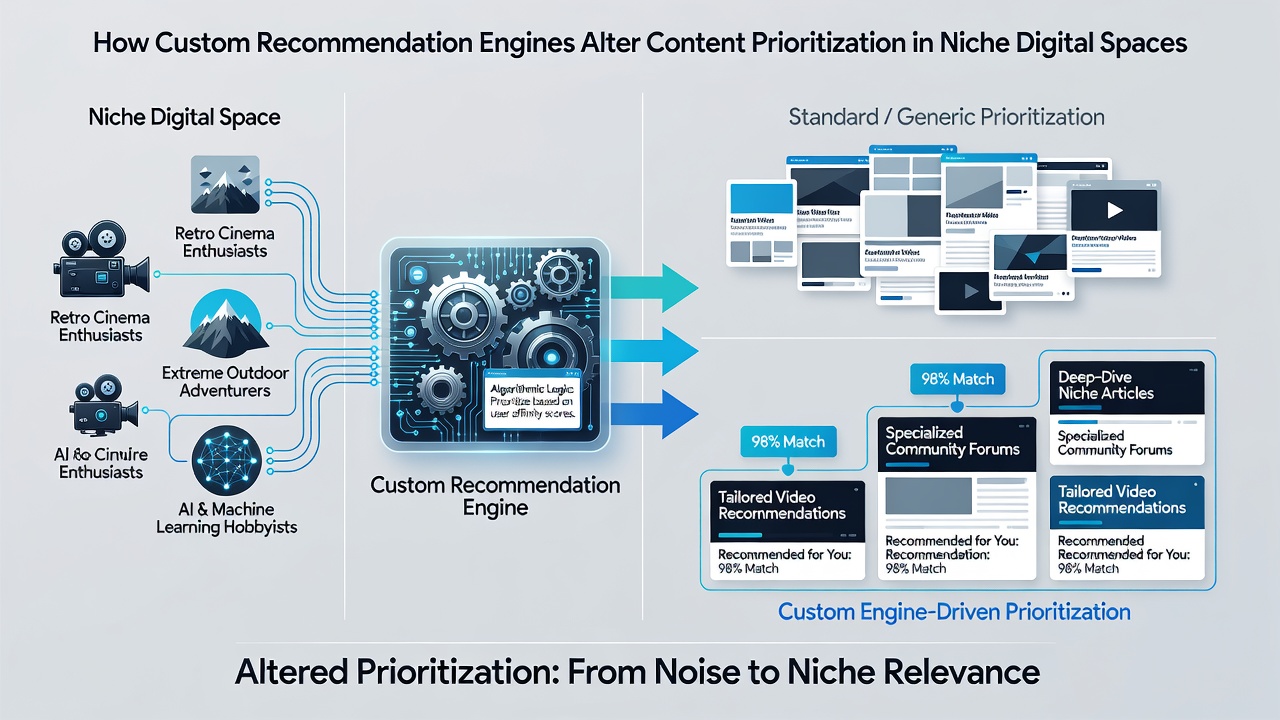
Take one case where operators of an independent film archive adjusted their upload strategy after noticing that engine-driven recommendations favored annotated clips over raw footage, and subsequent uploads incorporated more contextual layers to improve placement. Similar adjustments appear in technical documentation repositories where contributors add cross-links and version histories because the engines reward structural depth that keeps specialists engaged. External analyses from the US Federal Trade Commission on algorithmic transparency highlight how such custom systems concentrate visibility among established community voices, though the same reports also note opportunities for new entrants who align with detected preference clusters.
Impact on Creator Strategies and Platform Metrics
Creators monitor engine-driven ranking changes through internal tools that expose which signals drive promotion, and they respond by producing material that generates secondary interactions such as replies and annotations. This produces a feedback cycle where platforms collect richer datasets, which in turn refines the recommendation models further. Data from industry tracking services shows that niche platforms experience steadier growth in active user hours when prioritization emphasizes relevance depth, whereas reliance on generic popularity metrics correlates with higher churn rates among core participants. Australian Competition and Consumer Commission reviews of digital platform practices released in late 2025 underscore the role of localized data handling in these engines, noting that jurisdiction-specific privacy rules influence how interaction histories feed into prioritization decisions.
Those who track platform evolution point to October 2026 updates in several community tools where engine parameters began incorporating temporal decay functions tuned to niche event cycles, such as annual conferences or seasonal releases. This change elevates timely contributions during peak periods while preserving evergreen threads that maintain consistent cross-references, and it demonstrates how custom systems respond to domain-specific calendars rather than universal trends.
Conclusion
Custom recommendation engines continue to reshape content prioritization by embedding niche-specific signals into ranking logic, which alters visibility patterns and prompts creators to refine output accordingly. Platform data collected through 2026 confirms that these adjustments sustain engagement within targeted communities while producing distribution outcomes distinct from those generated by generalized algorithms. Researchers and platform operators alike continue to examine how these systems evolve as datasets expand and user behaviors shift.