Xander Fischer · 11 October 2026
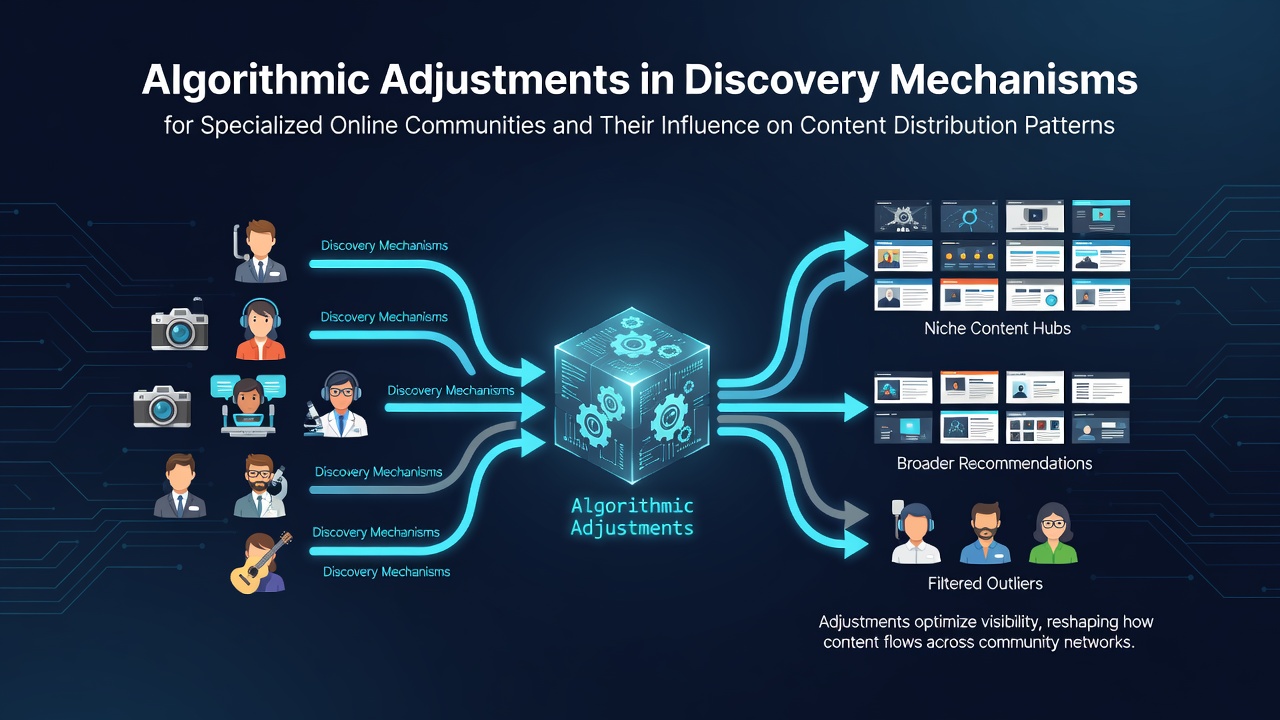
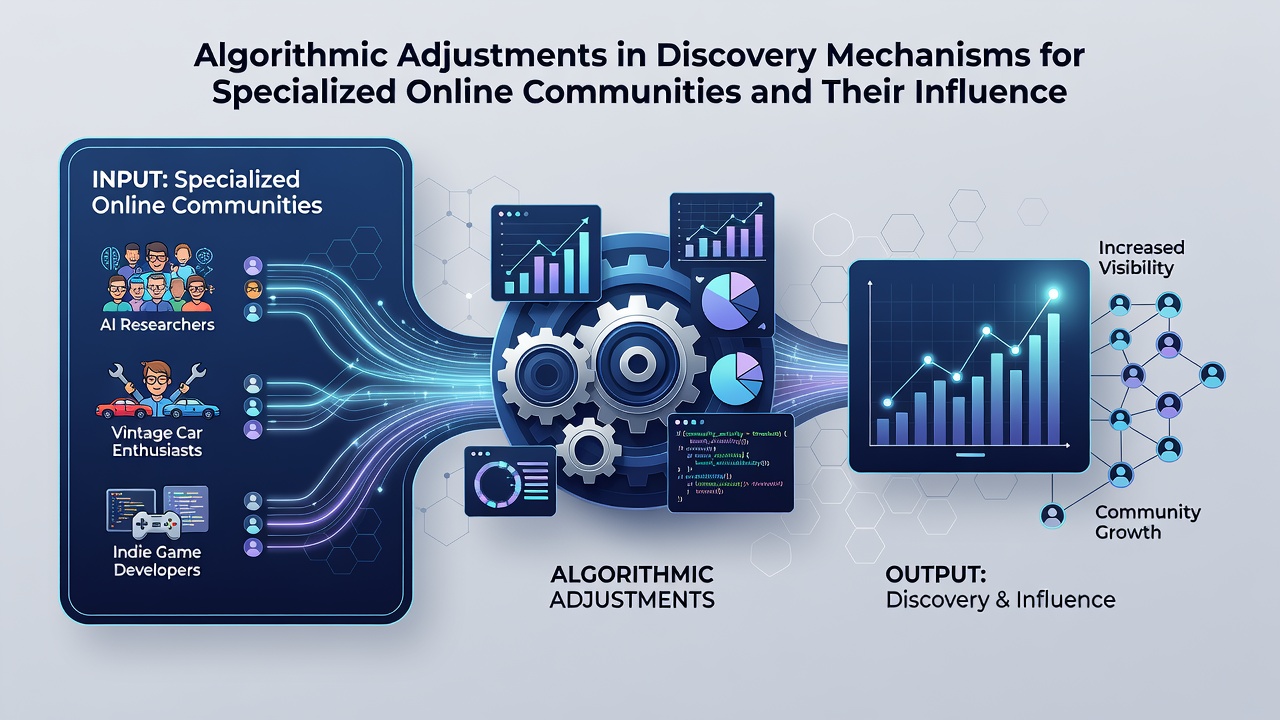
Algorithmic Adjustments in Discovery Mechanisms for Specialized Online Communities and Their Influence on Content Distribution Patterns
Specialized online communities rely on discovery mechanisms that sort and surface posts, threads, and resources according to evolving rules, and these adjustments reshape how content reaches members while altering distribution patterns across platforms. Researchers track these shifts through platform transparency reports and usage data, noting that changes often target relevance signals such as engagement velocity, user retention metrics, and topical coherence within closed groups.
Core Components of Discovery Algorithms in Niche Settings
Platforms serving hobbyist forums, professional networks, and interest-based groups adjust ranking functions to balance freshness with authority, and they incorporate signals like comment depth, cross-posting frequency, and member tenure. Data from multiple studies show that weighting these elements differently can elevate long-form contributions while suppressing rapid-fire replies, which in turn influences the overall pace of information flow. Observers note that October 2026 saw several mid-sized platforms release documentation detailing tweaks to their internal scoring systems, particularly around how dwell time on niche subforums factored into broader recommendation feeds.
Signal Prioritization and Its Effects on Visibility
When algorithms elevate semantic similarity over raw recency, content clusters form around established themes, allowing established contributors to maintain reach even as new posts arrive. This pattern appears in data collected by academic teams examining European digital marketplaces, where adjustments reduced the prominence of off-topic replies and increased exposure for verified sources within specialized directories. Those tracking these changes report that distribution patterns shift toward sustained visibility for core resources rather than transient spikes, creating steadier traffic streams for community archives.
Regional Variations in Algorithmic Governance
Regulatory frameworks across regions prompt platforms to disclose certain ranking criteria, and Canadian authorities have published guidance on transparency obligations that affect how discovery tools operate in local communities. In contrast, Australian research institutions have examined similar mechanisms through longitudinal studies of user behavior, revealing that adjustments favoring verified accounts correlate with slower but more consistent content spread among professional cohorts. These differences highlight how external requirements shape internal tuning without dictating exact formulas.
Platforms sometimes test modifications in limited cohorts before broader rollout, and findings from one such trial indicated that incorporating member-voted relevance scores improved retention metrics by measurable margins. The approach connects related factors such as historical interaction graphs and current session length into unified scoring models, which then determine placement in discovery queues.
Impact on Content Creators and Distribution Flows
Creators within specialized spaces adapt posting strategies when algorithms change emphasis from volume to quality signals, and this adaptation produces measurable alterations in how material circulates. Research indicates that communities experiencing such updates often see an uptick in threaded discussions that build over days rather than hours, while standalone announcements receive comparatively less initial lift. According to analyses from North American research centers, these patterns emerge because scoring systems now integrate multi-turn engagement data more heavily than single-action metrics.
Distribution networks also respond when platforms introduce decay functions that reduce older content prominence at varying rates depending on community size and activity density. Smaller groups experience faster drops in visibility for time-sensitive posts, whereas larger networks maintain extended reach through secondary sharing pathways. Figures from industry monitoring services reveal that cross-community linking plays an increasing role in sustaining exposure after initial algorithmic placement declines.
Measurement Challenges and Available Data
Quantifying precise effects remains difficult because platforms release aggregated statistics rather than granular per-community logs, yet available datasets still allow researchers to identify directional trends. Studies conducted by university groups in multiple countries demonstrate that adjustments to discovery parameters consistently correlate with changes in average session depth and return visit frequency. Those examining October 2026 platform updates found that communities emphasizing user-generated taxonomies experienced steadier distribution curves compared with those relying solely on keyword matching.
Future Trajectories in Algorithmic Tuning
Continued refinement of discovery tools will likely incorporate additional contextual layers such as device type and interaction modality, and these layers could further differentiate content distribution between mobile-first and desktop-oriented subgroups. Evidence from ongoing monitoring projects suggests that platforms testing hybrid models achieve more balanced outcomes across diverse community types, with content reaching intended audiences at rates that reflect both relevance and timeliness.
Conclusion
Algorithmic adjustments continue to reshape discovery within specialized online communities by recalibrating the factors that determine initial visibility and sustained circulation. Available data and regional reports illustrate consistent patterns in how these changes influence content distribution, providing observers with concrete indicators of evolving platform behavior through 2026 and beyond.